Moving to open source softwares
Through my whole life getting to know computers, I also got to know the concept of cracking. Everyone around me cracked software, so why shouldn’t I?
Today I’m proud to be running entirely properly licensed products, having replaced most of the licensed software with equivalent free software. It’s still less convenient, less smart and less pretty than the paid software, but it is the work of a whole community of developers, and the special part is how extremely fast it updates
I should also say that for some software, even though free options exist, the features they bring aren’t enough, so I decided to pay for (some of) those paid products.
1. Software I bought
1.1. Microsoft Office
Alternative: * Libre Office * Open Office

This suite needs no introduction. Even though there are alternatives like Libre Office or Open Office, basically MS Office’s overwhelmingly powerful features convinced me to pay for it every year (the Home Subscription plan, shareable with 5 users)
2. Software I got through support / partnership programs
These programs mostly target students. If your school gives out addresses ending in edu, you can join these programs and use licensed software suites completely free
2.1. Microsoft Windows
Alternative: Ubuntu - and linux operating systems in general

Through the DreamSpark program (formerly MSDN AA). The Windows license is still counted per specific licence. For Windows 10, MS added an electronic license form tied to your Windows account. I don’t have many machines to test this on, but I think a future where Windows is completely free of license fees isn’t far off (MS will pin down businesses and bleed them with the Ultimate and Windows Server editions)
2.2. Visual Studio Enterprise
Alternative: Visual Studio has a free edition, Visual Studio Community

Visual Studio is a super super powerful IDE. You can use it to build almost every kind of software product.
Back when I took intro to computing at school (learning C++ programming and so on), an IDE like this was missing. Searching online turned up quite a few programs like Code Blocks, or Borland Turbo C++ (that one isn’t free, but it’s way too ancient). Later I also struggled through installing Eclipse, then NetBeans
When I ‘discovered’ Visual Studio 2010 Express (the free edition back then), I…dropped all the others and have used it ever since
Funfact: MS also contributes to developing tools for eclipse -> source
3. Software I dropped
3.1. Internet Download Manager
Alternative: Free Download Manager
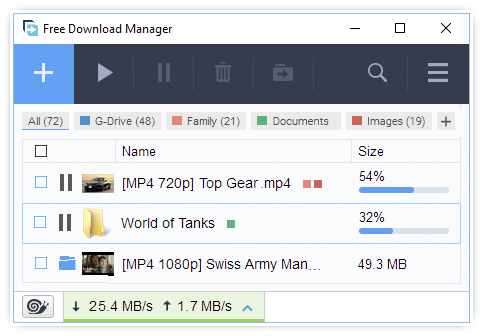
IDM was like must-have software on any computer. When the internet cable kept getting bitten by sharks, when bandwidth got throttled on schedule, when the connection ranged from dial-up beeping to ADSL — IDM helped you get past all that. And every time IDM released a version, the internet crowd took turns updating the crack.
Gone are the days of having to hunt for an IDM crack every once in a while, browsing youtube with a little popup showing up demanding to download, and so on and so forth.
Every feature IDM has, FDM has too, and somewhat better
- Downloading youtube videos: copy the youtube link and paste it into the Add download box
- Downloading a whole site: use FDM version 3.9, the Site Explorer feature
- Grabbing music and video links: right click the play area > Download this Video with Free Download Manager
FDM fixes some of IDM’s drawbacks: * no need to join the files after downloading: it reserves the space on the drive up front, downloads each part and writes into those slots * it can download torrents
3.2. Adobe Photoshop
Alternative: GIMP + VirtualDub + Capture One for Sony

Adobe Photoshop needs no further introduction. Finding a replacement tool for it cost me quite a lot of time and effort, and I’m still not really satisfied.
I used to mostly use Adobe Photoshop’s Camera Raw to edit the Raw photos from my Sony. Sony also provides a software suite for editing raw photos, Capture One Express, but its design isn’t as convenient as Camera Raw, and it doesn’t seem as fast either.
My Sony can shoot 11 frames / second, which can be stitched into an animated image. Photoshop supports this very naturally. Its replacement is Virtual Dub, which exports an AVI file but with a rather odd and rather hard-to-use codec
GIMP is the main suite replacing Photoshop; its strength is being open source, its weakness is updating very slowly.
3.3. Sublime Text
Alternative: Visual Studio Code

Sublime Text is the kind of software like WinRar where you can ‘evaluate’ it forever, but overall it is still software with a license fee
Basically it is a powerful Text Editor with features like multi cursor, extension support, extreme speed, and a Command Palette that saves you quite a few repetitive manual tasks. However, all of that has been and is being gradually overtaken by VS Code (except the speed)
3.4. SourceTree, or Git Clients in general
Alternative: GitExtension
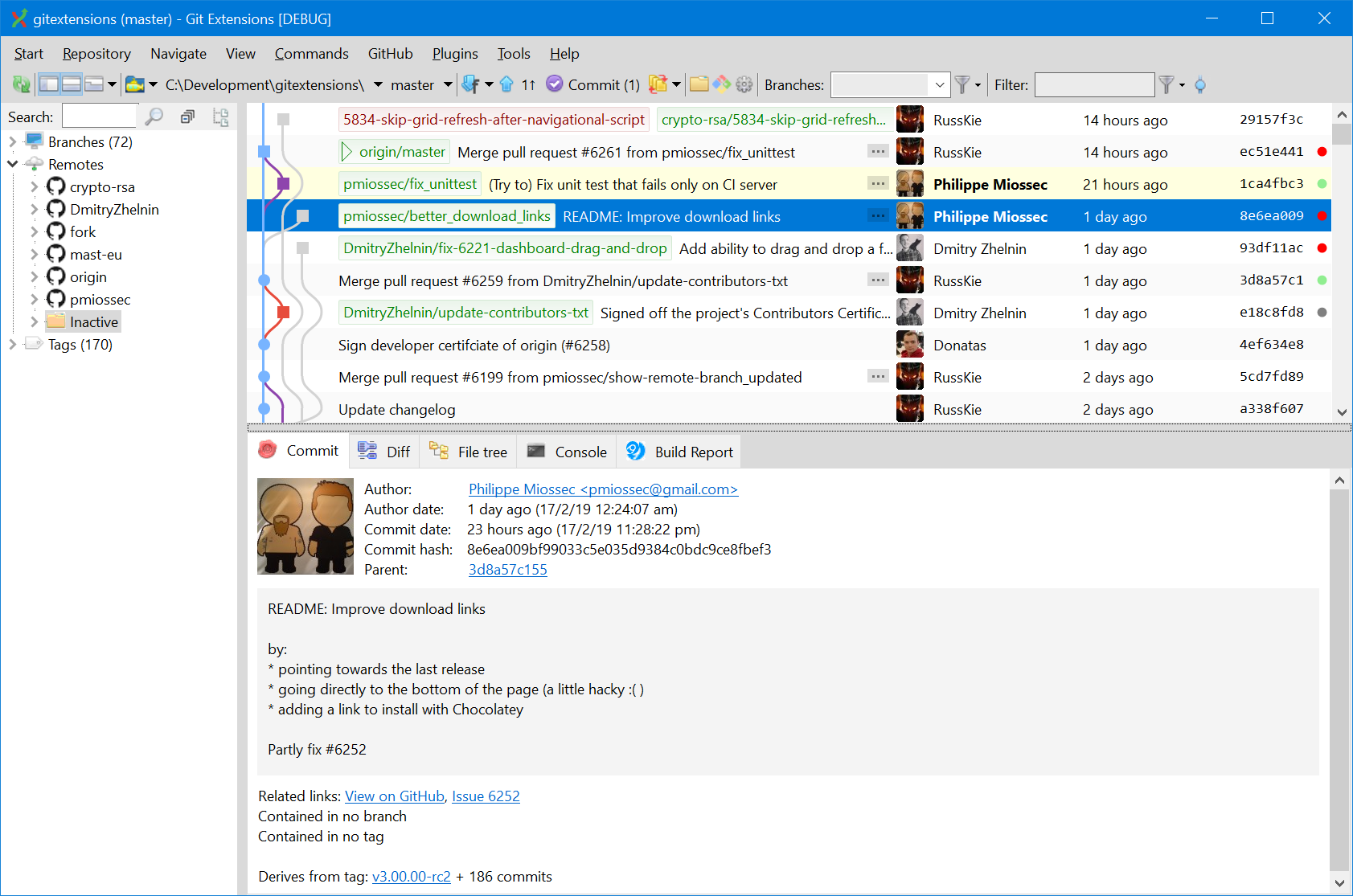
Some devs will fiercely object to this git extension, because its interface is…way too ugly by the standards.
There was a time when I felt the same. I also ‘refused’ GitExtension because of its interface. But the sun of truth shone through my heart when SourceTree turned out buggy all over the place and the other apps were too simple for my needs (GitKraken, GitHub Desktop)
None of them could beat the simplicity (however ugly) and the stability GitExtension provides.
4. Other software
My goal is open source, not freeware or freemium.
Free software that can be replaced by the web
- Zalo: https://chat.zalo.me/
- Slack
- Trello
- Skype: https://web.skype.com/ -> however, in the afternoon it often gets overloaded, so I have to switch to regular skype
And you? What free software are you using?